

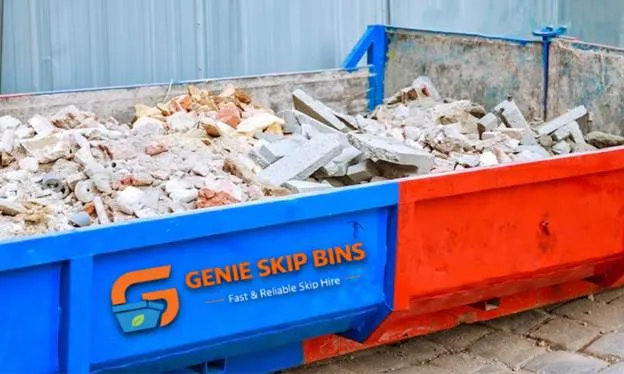
If you are a homeowner planning a renovation, a backyard makeover, or even just knocking down an old garden wall, you will eventually face the same question: What do I do with all this concrete and brick?
It looks like simple rubble. It is heavy, dusty, and annoying to move. Surely, you can just toss it in a regular skip bin or call the council hard rubbish collection, right?
Wrong. And this is where builders everywhere start to shake their heads.
Over years of working on job sites, builders have seen the same mistakes happen again and again. Homeowners underestimate the weight. They mix bricks with general junk. They overfill bins. And then they are shocked by the extra fees or, worse, the truck driver refusing to take the bin at all.
This guide reveals the insider knowledge that builders wish every homeowner knew before starting a concrete or brick disposal project.
Concrete and Brick Are NOT General Waste
This is the number one misunderstanding. Most homeowners see concrete and bricks as just another type of rubbish. But in the waste industry, they are treated very differently.
General waste includes things like old furniture, toys, carpet, and household junk. It is relatively light and easy to process.
Concrete and brick are classified as heavy waste, inert waste, or clean fill. They are dense, weighty, and require special handling.
Why does this distinction matter? Because skip bin companies charge based on weight as well as volume. A 4 cubic metre bin full of pillows might weigh 50 kilograms. The same bin full of broken concrete can weigh over 2 tonnes.
As skip bin hire in Darwin by Genie Skip Bins explains, different waste types require different bins and pricing.
The Weight Trap: Why Your “Small Pile” Is Actually a Tonne
Homeowners are famously bad at estimating the weight of rubble. Builders see this every week.
Here are some real-world numbers:
● A single standard brick weighs about 3 kilograms.
● One hundred bricks weigh 300 kilograms – nearly a third of a tonne.
● A cubic metre of broken concrete weighs approximately 2.4 tonnes.
Let us put that in perspective. A small garden wall made of 200 bricks weighs over half a tonne. A concrete pathway 5 metres long and 1 metre wide, only 10 centimetres thick, weighs about 1.2 tonnes. A demolished backyard shed slab can easily exceed 3 tonnes.
Most standard skip bins have a weight allowance of 500 kilograms to 1 tonne for general waste. If you fill that bin with concrete, you will exceed the limit by 200% or more.
What happens then? The truck driver will either:
● Refuse to lift the bin (safety risk for the truck)
● Charge you an overweight fee (often $50 to $150 per extra 100 kilograms)
● Dump the bin back on your driveway and charge a call-out fee
Builders wish you knew: Weigh your rubble before you book. If it feels heavy, it IS heavy.
You Need a Dedicated Heavy Waste Bin
Because of the weight issue, you cannot use a standard skip bin for concrete and brick disposal. You need a dedicated heavy waste bin or clean fill bin.
Look for providers that explicitly list “Soil & Dirt” or “Heavy Waste” as a category. GenieBins Gold Coast offers this clearly on their size chart, with bins from 2 cubic metres up to 30 cubic metres specifically for soil and dirt (which includes concrete and brick).
NT Skip Bin Hire also emphasises versatile bin selection for different project needs. A good provider will ask you what you are disposing of before they recommend a bin size.
Builders’ tip: Even with a heavy waste bin, do not fill it to the brim. Heavy loads need to be kept lower than the rim for safe transport. The truck’s hydraulic lift has a maximum lifting capacity. Exceed it, and the bin stays put.
Never, Ever Mix Concrete with General Waste
This mistake costs homeowners hundreds of dollars.
When you mix concrete and bricks with general household waste (timber, plasterboard, plastic, old clothes), the entire load becomes mixed heavy waste. This is the most expensive category to dispose of.
Here is why: At the transfer station, workers have to separate the heavy materials from the light materials. This takes time and labour. The facility charges the skip bin company a higher fee. The skip bin company passes that fee to you.
A real-world example from a builder:
● A dedicated heavy waste bin (2m³ full of concrete): $250
● A mixed waste bin (same volume, half concrete, half junk): $450 or more
The rule is simple: Keep your concrete and bricks completely separate. Do not throw in old timber, carpet, or food waste. Do not hide a paint tin at the bottom. A clean load of pure concrete or brick is cheaper to dispose of than a contaminated load.
Concrete and Brick Are Highly Recyclable (Yes, Really!)
Here is something that surprises most homeowners: Concrete and brick are not “trash.” They are valuable resources.
When you dispose of concrete and brick responsibly, they are taken to a recycling facility (not a landfill). There, they are:
● Crushed into smaller pieces
● Sorted to remove metal and other contaminants
● Screened into different sizes
● Sold as recycled aggregate or road base
This recycled material is used to build new driveways, footpaths, and road foundations. It is cheaper than mining new rock and saves thousands of tonnes from entering landfills.
As Rapid Bins notes on their Brisbane page: “Brisbane generates thousands of tonnes of household and construction waste each year and most of it can be recycled. By hiring skip bin services in Brisbane, you help reduce landfill waste, promote recycling, and support a cleaner, greener city.”
Council Permits: Where Can You Put a Heavy Bin?
Concrete and brick disposal often requires a larger, heavier skip bin. And heavy bins cannot go just anywhere.
If you plan to place the skip bin on private property (your driveway, front yard, or construction site), you generally do not need a permit. However, the ground must be hard and level. A heavy bin full of concrete can sink into soft soil or crack a poorly constructed driveway.
If you plan to place the bin on public property (the nature strip, footpath, or road), you almost certainly need a council permit. As SkippyBin Adelaide states: “You must have proper permission from the city council to put a skip bin on the street or public land. The skip bin must not block any pedestrian or the way.”
Builders’ advice: Always check with your local council before booking. In Adelaide, as in most Australian cities, the homeowner is responsible for obtaining permits. Your skip bin provider can advise you, but the legal responsibility is yours.
Breaking Down Rubble Saves Space and Money
Builders have a simple trick for saving money on skip bins: break down your rubble before it goes in the bin.
Concrete and brick take up a lot of space when they are in large chunks. A single 50 kilogram concrete slab might fill a quarter of a small skip bin. But if you break that slab into smaller pieces (around 50mm to 100mm), the pieces stack together with less wasted air space.
How to do it safely:
● Use a sledgehammer (8 to 12 pounds) for bricks and thin concrete
● Use a jackhammer (electric or pneumatic) for thick slabs
● Wear safety glasses, heavy gloves, and steel-toe boots
● Protect your ears – breaking concrete is loud
The result: You can fit up to 30% more rubble in the same bin. That means you might need one bin instead of two, saving you hundreds of dollars.
Builders’ warning: Do not go crazy with a sledgehammer if you are not used to physical work. Back injuries from swinging heavy hammers are common. Pace yourself. Take breaks. Ask a friend to help.
Cost-Saving Strategies from Professional Builders
After years of managing waste on job sites, builders have developed proven strategies to save money on concrete and brick disposal. Here are their top tips:
Strategy 1: Call a “Bin and Remove” Service
For very large amounts of concrete (over 5 tonnes), consider hiring a company that brings a truck with a hooklift. They drop an empty bin, you fill it, and they haul it away. This is often cheaper than multiple small bins.
Strategy 2: Advertise “Free Clean Fill”
If your concrete and bricks are clean (no rebar, no paint, no contaminants), someone else might want them. Post on local community pages: “Free clean fill, you load and haul.” Landscapers and farmers often need rubble for erosion control or road base.
Strategy 3: Use a Weight-Aware Provider
Companies like Skip Bin Hire Perth pride themselves on “transparent rates without any hidden charges.” Ask upfront about weight allowances and overage fees. A cheap upfront price is useless if you get slammed with overweight charges later.
Strategy 4: Share a Bin with a Neighbour
If you and a neighbour are both doing small demolition projects, share a single heavy waste bin. Split the cost 50/50. Just make sure you coordinate filling so neither of you exceeds the weight limit.
Strategy 5: Crush It Yourself for Reuse
For smaller amounts (under 1 tonne), consider renting a small portable concrete crusher. These machines crush rubble into gravel that you can reuse as a path base, drainage rock, or garden feature. It costs money upfront but saves skip bin fees and gives you useful material.
Conclusion: Be Smart, Save Money, and Stay Safe
Concrete and brick disposal is not complicated, but it is different from throwing away household junk. The key lessons from builders are simple:
● Concrete and brick are heavy waste, not general waste. Treat them separately.
● Book a dedicated heavy waste bin from a provider that offers soil and dirt categories.
● Do not mix concrete with general rubbish. Keep loads clean to avoid extra fees.
● Concrete is recyclable – you are helping the environment by disposing of it properly.
● Check council permits if the bin goes on public land.
● Never put asbestos in a skip bin – call a licensed professional.
● Break down rubble to fit more in each bin and save money.
● Allow 24-48 hours for delivery and pickup of heavy bins.
● Wear safety gear and lift carefully to avoid injury.
Next time you look at that pile of broken concrete and old bricks, do not guess. Do not risk it. Follow the builders’ advice. Book the right bin, keep your load clean, and dispose of your rubble responsibly. Your back – and your wallet – will thank you.